When autumn arrives, the woodland floor can suddenly burst into crimson. Rising quietly from the fading greenery, red spider lilies (Lycoris radiata) seem almost otherworldly, their long, curling stamens and delicate, thread-like petals creating an unforgettable silhouette against the quiet shades of the season.
Beautiful, fleeting, and surrounded by centuries of folklore, the red spider lily is more than simply an autumn flower. Its unusual life cycle and striking appearance have inspired stories of separation, remembrance, death, and rebirth across East Asian cultures.
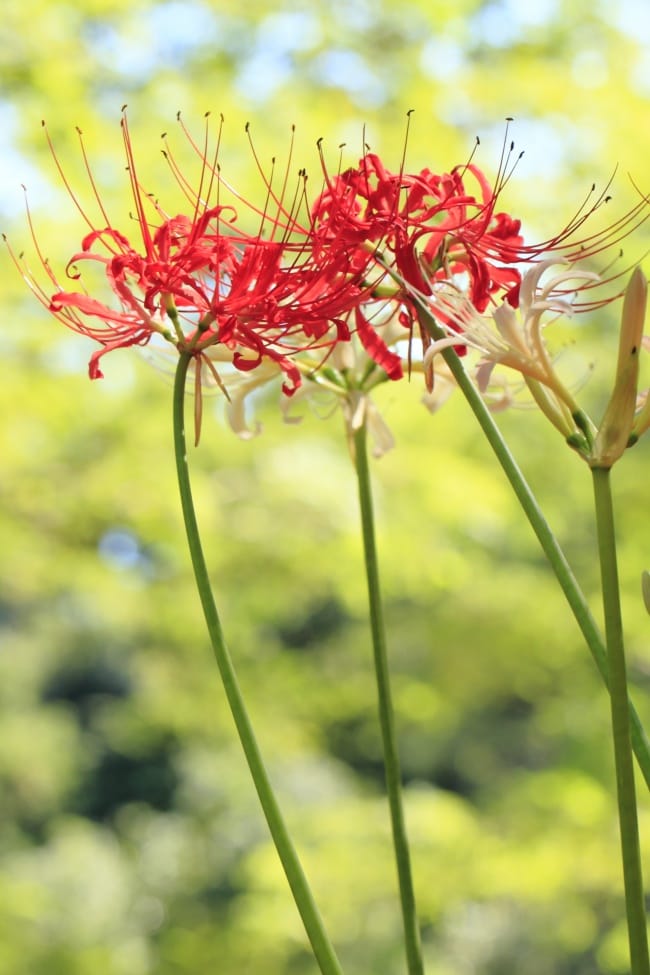
Red spider lilies mingle with pale white lycoris blooms, touched by gentle sunlight filtering through the surrounding greenery.
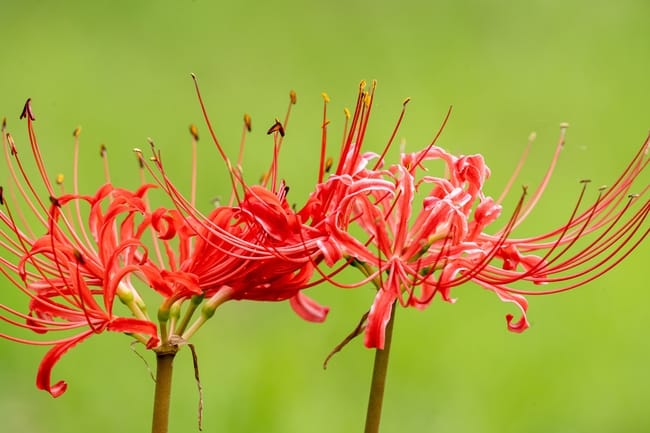
A close-up reveals the intricate, curling petals and long stamens of a fully opened spider lily.
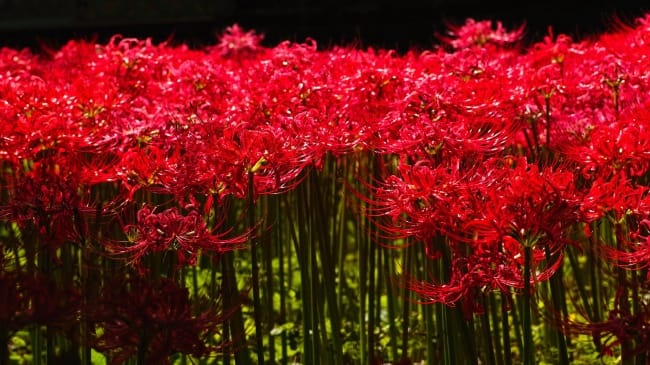
A sea of red spider lilies spreads across the shaded woodland floor, forming a sweeping carpet of crimson.
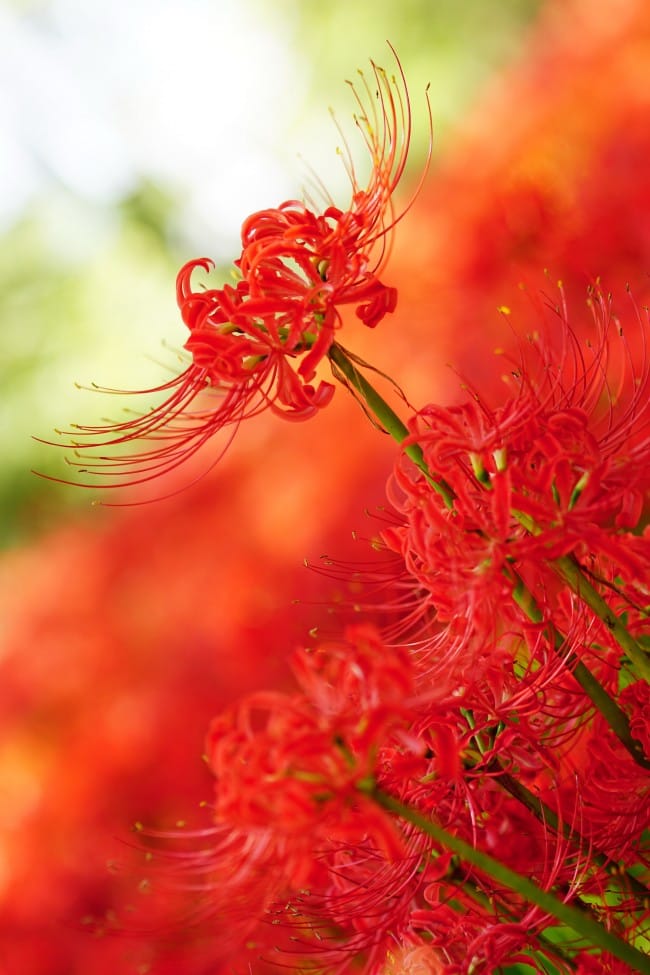
Curled crimson petals glow against a warm, softly blurred background, emphasizing the flower’s elegant and almost surreal shape.
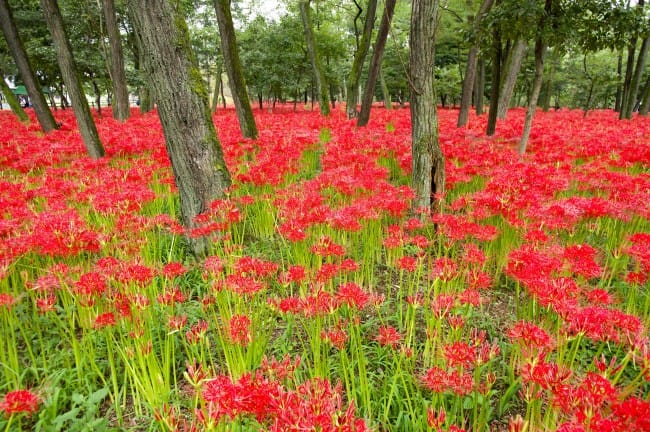
Red spider lilies carpet the woodland floor beneath mature trees, creating one of autumn’s most memorable natural scenes.
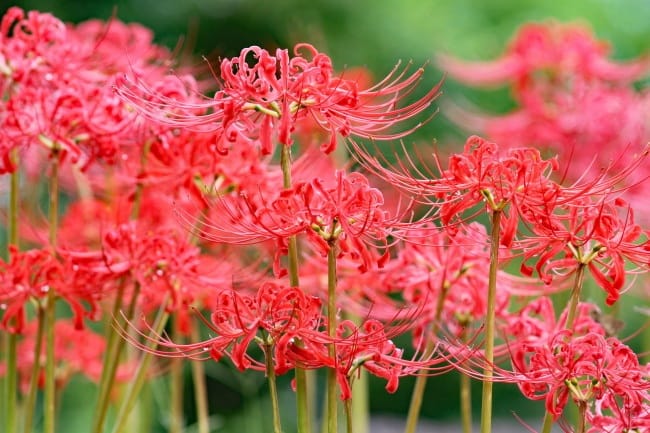
Several slender stalks rise together, carrying layers of ruffled crimson flowers toward the autumn light.
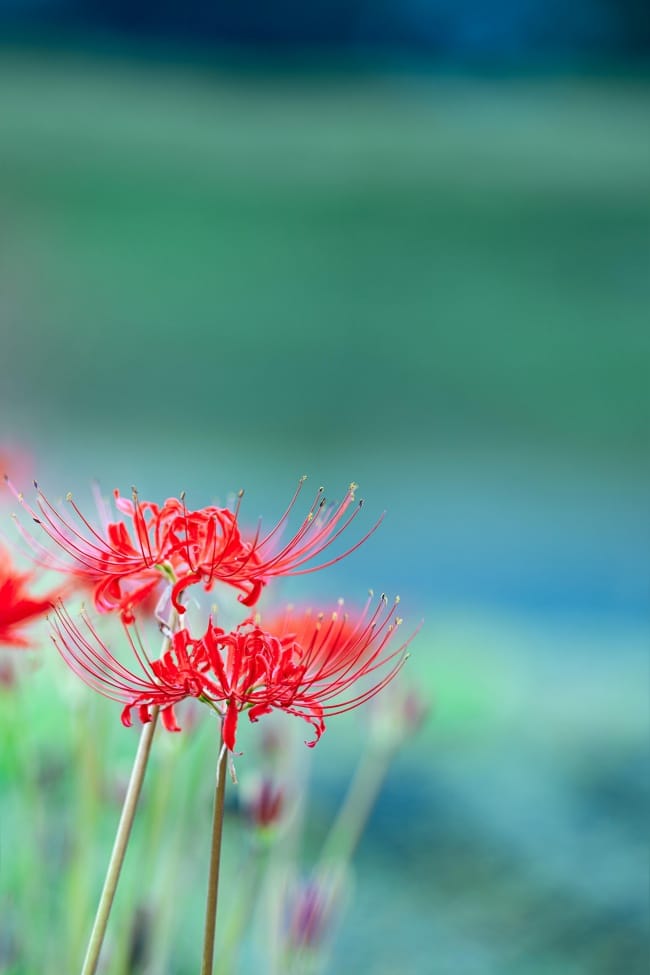
Two delicate spider lilies stand against a dreamy teal background, their vivid red petals contrasting with the cool tones beyond.
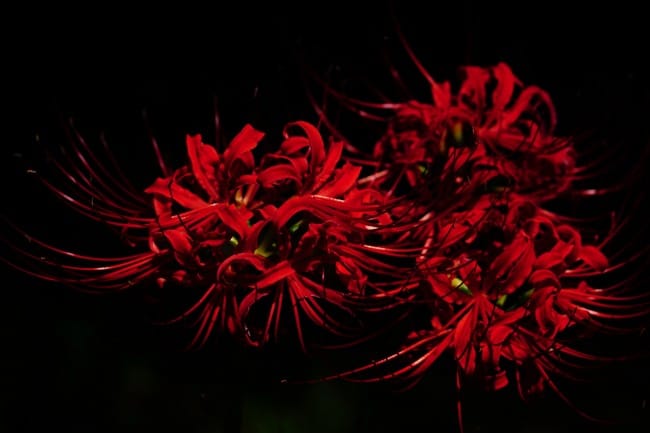
In a dramatic low-key portrait, the brilliant red blooms appear almost luminous against the surrounding darkness.
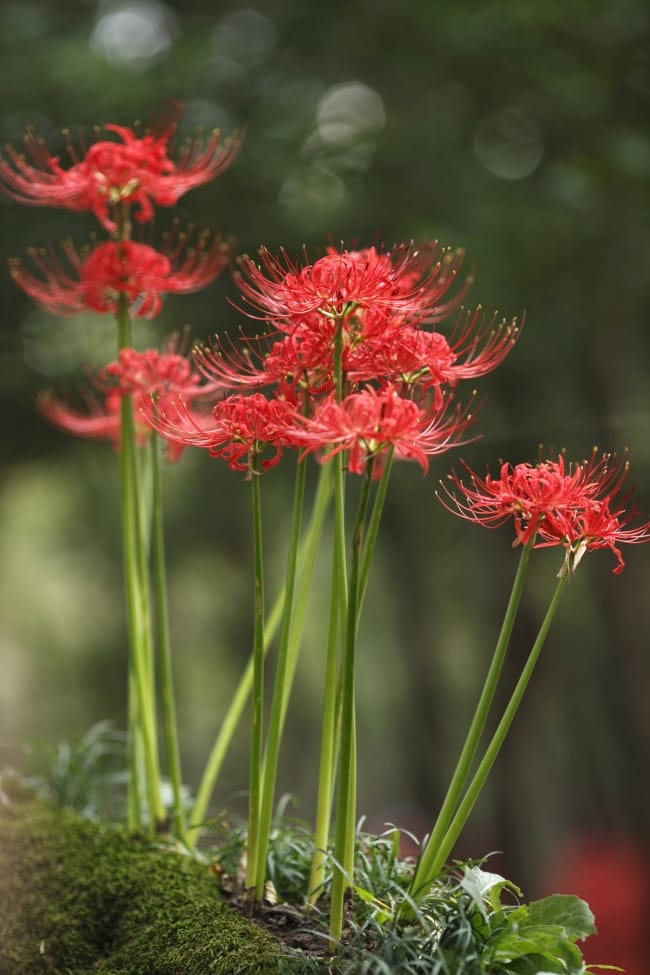
Slender flower stalks emerge from moss-covered earth, rising quietly through the shadows of the forest.
The Flower That Blooms Without Its Leaves
One of the most fascinating things about the red spider lily is the unusual rhythm of its growth. The flowers appear first, rising from the bare earth without leaves. Only after the blossoms fade do the leaves emerge, remaining through the colder months before disappearing again.
This strange separation gave rise to an enduring image in East Asian folklore: the flower and its leaves can grow from the same root, yet they never meet.
It is a simple botanical fact, but an unusually poetic one. Something can belong to the same root, share the same beginning, and still be destined never to meet.
The bloom has no shore to bound;
Soul sinks into Lethe, yet still within its stream.
Drunk, I know not how far the misty waters stretch;
In dreams, a faint lamplight breathes a chill.
Perhaps this is why the red spider lily has long carried such an air of mystery. Its brilliant color suggests passion and life, while its fleeting bloom and strange life cycle evoke separation and remembrance. In Japanese and Chinese cultural imagery, the flower has consequently become associated with autumn, the boundary between life and death, and the bittersweet feeling of letting go.
Where Flower and Leaf Never Meet
There is an old poetic image surrounding the red spider lily: flowers and leaves are destined to pass each other by, blooming in different seasons of the same life.
Blossom and leaf shall never meet for a thousand years,
Fates rise and fade, swirling in an endless dance.
The flower speaks no word, yet gently bows its head;
Buddha seeks to calm my heart, but even he sighs in vain.
Whether understood as a tale of lovers separated by fate, a metaphor for impermanence, or simply a beautiful legend inspired by the plant’s biology, the image remains remarkably powerful. The red spider lily seems to embody a quiet contradiction: it blooms with extraordinary intensity, yet only for a brief moment.
One Flower, One World
Beyond its legends of separation, the flower can also be viewed through a more contemplative lens. A single blossom can become a small universe of its own—a fleeting moment of color, light, and silence within the changing forest.
One flower, one world;
One leaf, one Tathāgata.
One grain of sand, one pure paradise;
One smile, one mote of dust.
Perhaps this is the quietest lesson of the red spider lily. Nothing in nature remains forever. Flowers bloom, leaves appear, seasons turn, and everything eventually returns to the earth. Yet for a brief moment, a single flower can hold an entire world within it.
About Lycoris radiata
Known scientifically as Lycoris radiata, the red spider lily belongs to the Amaryllis family. It is native to parts of East Asia and is widely cultivated and naturalized in other regions.
The plant is particularly recognizable for its vivid scarlet flowers, long curved stamens, and unusual seasonal growth cycle. It generally flowers in late summer or early autumn, often appearing almost overnight along woodland edges, paths, gardens, and grassy areas. Its leaves emerge later, after flowering has finished.
Red spider lilies are also known by names such as red magic lily, cluster amaryllis, and hell flower. Some of these names reflect the flower’s association with funerary traditions and the boundary between life and death in different cultures.
It is also important to remember that Lycoris radiata contains toxic compounds and should not be eaten. The bulbs and other parts of the plant can be harmful if ingested, so these beautiful flowers are best admired rather than touched or consumed.
A Flower for Autumn
There are few flowers quite as theatrical as the red spider lily. Its fiery petals, unusual life cycle, and centuries of folklore give it an atmosphere unlike almost any other autumn bloom.
Perhaps that is what makes a field of spider lilies so captivating. Seen from a distance, they look like a river of red flowing beneath the trees. Seen up close, each flower reveals a delicate architecture of curling petals and impossibly long stamens.
For a few short weeks, the forest becomes crimson.
Then the flowers disappear, leaving only their leaves behind.
And perhaps that is the beauty of the red spider lily—not that it lasts, but that for a brief moment, it makes us stop and notice.
Have you ever encountered a field of red spider lilies in the wild?